SpringOne 2GX 2011
Chicago, October 25-28, 2011
For Members

 Magnificent Mile Marriott
Downtown Chicago
540 North Michigan Ave.
Chicago, Illinois 60611
1 (800) 228-9290
[ Map it ]
2GX - Session Descriptions
Andres Almiray - Griffon Project Lead

Getting Groovy on the Web and Desktop
Discover how both the Grails and Griffon frameworks bring back the fun to web and desktop development.
Painless Desktop Application Development: The Griffon Experience
Despite of all the buzz and hype around webapps over the last 8 years fact is that desktop applications are still found in many places, specially in the enterprise. However the legends are true: building desktop applications is a hard job. But it does not have to be. Enter Griffon.
Burt Beckwith - Core Member of the Grails Development Team

Advanced GORM - Performance, Customization and Monitoring
You've used GORM in Grails apps, you've written custom criteria and HQL queries, and now you're ready to take database access in Grails to the next level.
Deploying Grails Applications to Cloud Foundry
Cloud Foundry is a revolutionary open-source PaaS service from VMware and Grails applications have first-class support on the platform.
Grails Spring Security Plugins
In this talk we'll look at the Spring Security Core plugin and its dependent plugins. The core plugin provides all of the standard functionality you expect from a security plugin (URL security, users, roles, form-based authentication, etc.) and extension plugins add extra functionality such as OpenID support, LDAP authentication, object and method security with ACLs, and more.
Tim Berglund - Developer, Consultant, Author

Grails in Front, Cassandra In Back
Cassandra is a scalable, highly available, column-oriented data store in use at Facebook, Netflix, Twitter, Reddit, Rackspace, and a growing list of other deployments. It offers a compelling combination of a rich data model, a robust deployment track record, and a sound architecture—and it isn't just for web-scale operations. It might be a good fit for your Grails app!
Plugging Into Gradle Plugins
Gradle is being adopted by enterprises and open-source projects alike for its ease of use, flexibility, and compatibility with existing standards. However, Gradle's true strength shines not when it is viewed as a wrapper around standards, but as a toolkit for creating your own standards to reflect your build patterns and practices. It is extensible at every level, but most powerfully at the level of Gradle plugins.
Jeff Brown - Core Member of the Grails Development Team

A Thorough Introduction To Grails
Grails represents technology that offers great flexibility and power without the complexity introduced by other Java web application frameworks.
GORM Inside And Out
GORM is a super powerful ORM tool that makes ORM simple by leveraging the flexibility and expressiveness of a dynamic language like Groovy. With GORM developers get access to all of the power and flexibility of an ORM tool like Hibernate without any of the complexity.
Powerful Metaprogramming Techniques With Groovy
The dynamic nature of Groovy makes it a fantastic language for building dynamic applications for the Java Platform. The metaprogramming capabilities offered by the language provide everything that an application development team needs to build systems that are far more capable than their all Java counterparts. Taking advantage of Groovy's metaprogramming capabilities brings great new possibilities that would be very difficult or just plain impossible to write with Java alone. Building Domain Specific Languages in Groovy is easy to do once a team has a good understanding of the Meta Object Protocol (MOP) and the method dispatch mechanisms used by the Groovy runtime environment.
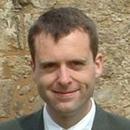
Andy Clement - Sr. Software Engineer with SpringSource
Spring Tooling Update - New and Noteworthy
In this session we will walk through the Spring tooling landscape and demo the new and improved features. Attendees will see tooling support for Spring 3.1 in action together with improved support for annotation-based Spring programming including content-assist, validation, quick-fixes and refactorings. We will take a look at improved support for XML-based Spring programming and the tooling support for the Cloud Foundry PaaS. Then a quick tour of recent improvements in the Groovy/Grails support and our new Gradle tooling. We close this session with an overview of the general release cycle and the plan for the next releases.
Tooling the Groovy Ecosystem
The SpringSource Tool Suite makes developing your Groovy and Grails applications significantly easier with its support for debugging, refactoring, editing, and server diagnostics. In this session, we will showcase the Groovy and Grails tooling available in STS, focusing on the more recent advances such as configurable DSL support, Grails refactoring, debugging, and direct deployment to either tcServer or the Cloud Foundry PaaS. From a build point of view we'll take a quick look at the new Gradle support and an alternative to GMaven for building your maven based mixed Java/Groovy projects.
Luke Daley - Principal Engineer @ Gradleware

Geb - Very Groovy Browser Automation
Geb is a browser automation solution for Groovy. It brings together the power of WebDriver, the elegance of jQuery content selection, the robustness of Page Object modelling and the expressiveness of the Groovy language. Geb enables more expressive, more concise, and (very importantly) more maintainable web tests.
Next Level Spock
So you already know and love Spock, the Enterprise ready testing framework, but want to know how to make the most of it and take your testing to the next level? Then this talk is for you. Even if you're new to Spock, but are interested in making your testing more effective this talk is for you.
Productive Grails Functional Testing
We all know we should be writing functional (i.e. web) tests for our Grails applications, but this can sometimes seem like too much work for not enough gain. In this talk we'll look at the current Grails plugins that are out there that can start to decrease the development and maintenance cost and make getting the coverage you need more achievable.
Scott Davis - Author of "Groovy Recipes"

CoffeeScript for Groovy Developers
It always amazes me when Groovy developers say, "I don't like JavaScript." Both are dynamic languages that make metaprogramming seamless, but Groovy edges out JavaScript in the race for conciseness and syntactic sugar. That is, until CoffeeScript came onto the scene.
CoffeeScript is to JavaScript as Groovy is to Java -- both give their respective base languages a thoroughly modern makeover. CoffeeScript brings string interpolation (think GStrings), null-safe property access (person?.middleName and our beloved Elvis operator), and much more to JavaScript development. Perhaps CoffeeScript founder Jeremy Ashkenas says it best: "Underneath all of those embarrassing braces and semicolons, JavaScript has always had a gorgeous object model at its heart. CoffeeScript is an attempt to expose the good parts of JavaScript in a simple way."
CoffeeScript is more than an intellectual curiosity. It is the #1 most followed project on GitHub. It ships as a standard library in Rails 3.1. But most importantly, Brendan Eich openly acknowledges that CoffeeScript is influencing the future direction JavaScript (formally, ECMAScript "Harmony"). Much of what you see in CoffeeScript today will become native to JavaScript tomorrow.
HTML 5 for Grails Developers
Now that HTML5 is the standard output format for Grails 2.0, shouldn't you really dig in and see what all of the excitement is about?
HTML 5 offers dramatic new improvements for page organization, offering out-of-the-box support for elements like header, footer, nav, section, and article. HTML 5 adds native support for form features such as placeholder text, autocomplete, autofocus, and validation. Additionally, there are a host of new form elements available (email, url, number, range, date, and search) that gracefully degrade in "classic" web browsers - IE, I'm looking at you!
Hans Dockter - Founder of Gradle and CEO of Gradleware

Enter The Gradle
This presentation introduces the audience to the power of Gradle through many real-world examples that are demonstrated live. By the end of the presentation, you'll understand how Gradle helps to elegantly solve the challenges that we face in our daily enterprise builds.
Enterprise Gradle
In this talk we will cover many Gradle power features that are particularly helpful for the real heavy lifting often needed in enterprise builds.
Colin Harrington - Senior Consultant, Object Partners, Inc

Testing Grails: Experiencies from the field
Testing is built into grails, but many Grails apps go untested. We'll cover how to test many different artefacts as well cover many principles that have helped lead to succesfully tested Grails application.s
There an back again: a story of a simple HTTP request
There an back again: a story of a simple HTTP request's travels through the depths of an ordinary grails application running in tomcat. Grails is an amazing "convention over configuration" framework that makes the complexities of Spring, Hibernate, etc. a breeze to work with, but it is easy to overlook or misunderstand the many levels of abstraction that make this framework so powerful.
Shawn Hartsock - Sr. Consultant w/Open Software Integrators

Performance Tuning Grails Applications
Your awesome application is getting such heavy use it's starting to slow down. Learn how to add rocket fuel to your rocket fuel! I’ll use examples from my real-world experiences working with Grails applications that have been sunk by heavy load and then turned around and learned how to fly.
The Highly Monitored Grails Application
You don’t want to have your users tell you about application performance problems. You want to know about them before they do.
Mark Johnson - Staff System Engineer @ VMware

Architecting an Enterprise quality Grails application
Grails is often considered just a quick simple web application development framework. But the truth is it is much more.
Groovy Closures - The way to cleaner code
The factory patterns and callbacks have been around for a long time as a technique to provide flavor specific code variations. But they are awkward and hard to update. Enter Groovy closures. Imagine having the ability to inject different coding flavors using code closures. If you need a different flavor, then just pass a different code block. Now imagine that all of this works on the JVM!
Paul King - co-author of "Groovy in Action"

Groovy Modularisation
Groovy 1.9 includes a brand new modularisation feature which allows Groovy to be split into smaller pieces. This mechanism allows us to package up Groovy for different contexts (think enterprise servers, desktops, netbooks and phones) but also to evolve Groovy over time. It also allows module writers greater power in terms of being able to leverage many of the Groovy run-time and compile-time internal features.
Groovy and Concurrency with GPars
This talk looks at using Groovy for writing multi-threaded, concurrent and parallel programs. We'll briefly look at leveraging legacy Java techniques such as multiple processes, multiple threads, the java.util.concurrent APIs and shared-state atomicity.
We'll then look as some useful AST transforms in core Groovy (Lazy, Synchronized, Immutable, WithReadLock and WithWriteLock) before divign headlong into GPars. GPars is a comprehensive library for parallel execution that provides a menu of options to the developer.
Groovy.DSLs(from: beginner, to: expert) 2011 Edition
This talk examines how dynamic languages in general and Groovy in particular take us toward the goal of writing programs for a particular domain using phrases that look familiar to subject matter experts from that domain. Groovy, is a popular and successful dynamic language for the JVM. It offers many features that allow you to create embedded Domain Specific Languages(DSLs) including Closures, compile-time and run-time metaprogramming, command chain expressions, operator overloading, named arguments and other concise syntax conventions.
Software Development Best Practices - Groovy Edition
Over the years we have seen many debates about how best to write and maintain our programs. Should we use OO or functional? Should we use sequential or concurrent? Should we use static or dynamic typing? What design patterns should we use (or anti-patterns should we avoid)? What can we learn from the strengths and weaknesses of the many languages that are now available for us to program in?
Dave Klein - Author of 'Grails: A Quick-Start Guide'

GORM: Object Persistence Done Right
Grails object relational mapping (GORM) is one of the most powerful features of the Grails framework. Project bootstrapping and CRUD scaffolding are nice things to get you started, but GORM continues to pay off throughout the development of an application. Even maintenance tasks become simpler and more fun with GORM. Now, with Grails 2, GORM has become more powerful and easy to use than ever.
Dierk Koenig - Lead Author of Groovy in Action

Extending Java's reach with Groovy, 7 scenarios
You and your team know Java well and you have invested much to get there. But there are places in any Java project where you have to leave your preferred language to get things done: for build automation, modeling complex business domains, smart configuration, user macros, office integration, ad-hoc inspections, and more.
Pro Groovy
Many Java developers have come to appreciate Groovy for its conciseness and scripting capabilities but not many use the language to its full extend.
Rich Grails UIs with Canoo RIA Suite
Learn how to easily write a Grails web application that appears to your users as if it was a desktop application.
Kenneth Kousen - Author of "Making Java Groovy"

Groovy Spring Beans
Groovy and the Spring framework are old friends. Spring includes dynamic beans that can be modified while a system is still running, and of course the Grails framework is built on top of Spring MVC. Here we'll illustrate all the ways that Groovy works with Spring, and show how a developer can take advantage of those capabilities right away.
Improve Your Java with Groovy
Groovy was never intended to replace Java. Instead, it expands Java capabilities and makes developers' lives easier. In this presentation, we'll survey many ways to make your Java systems easier by adding Groovy.
Guillaume LaForge - Head of Groovy Development for SpringSource

Gaelyk -- Groovy coding the cloud
Guillaume will speak about Gaelyk, a lightweight Groovy toolkit for easily developing Groovy applications to be deployed on Google App Engine Java.
Groovy Update, what's new in 1.8 and what's coming?
The latest major version of Groovy was released a few months ago, and it's time to have a closer look at what's inside!
Groovy.DSLs(from: beginner, to: expert) 2011 Edition
This talk examines how dynamic languages in general and Groovy in particular take us toward the goal of writing programs for a particular domain using phrases that look familiar to subject matter experts from that domain. Groovy, is a popular and successful dynamic language for the JVM. It offers many features that allow you to create embedded Domain Specific Languages(DSLs) including Closures, compile-time and run-time metaprogramming, command chain expressions, operator overloading, named arguments and other concise syntax conventions.
Peter Ledbrook - Grails Advocate at SpringSource
Grails in the Java Enterprise
With all the buzz around rapid web application development frameworks, are enterprise developers left looking on enviously? Not at all. Grails brings RAD to web application development in the Java enterprise and this talk discusses the integration options available to you and where difficulties may arise.
Grails in the cloud
2011 is turning into a tremendously exciting year for Grails developers. One of the most important developments is the arrival of several new cloud hosting providers that work with Grails applications with minimal effort on your part. No longer do we have to look enviously at our Rails comrades who have Heroku et al.
Grails plugin development - lessons to learn
It's very easy to create plugins for Grails, particularly if all you want to do is share some domain classes between projects. But even with the simplest plugins, you still need to know a few things to make integration with applications and other plugins as smooth as possible.
Matthew McCullough - Open Source Architect, Ambient Ideas

Groovy, Gradle, Grails and Git: Why, When, Where, What and How
The open source, and specifically, the Groovy, Grails, and Gradle communities are abuzz with the use of Git. But why? We'll take a anthropological look at the projects that have converted from Subversion to Git and why they decided to do so.
Plugging Into Gradle Plugins
Gradle is being adopted by enterprises and open-source projects alike for its ease of use, flexibility, and compatibility with existing standards. However, Gradle's true strength shines not when it is viewed as a wrapper around standards, but as a toolkit for creating your own standards to reflect your build patterns and practices. It is extensible at every level, but most powerfully at the level of Gradle plugins.
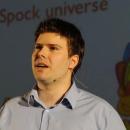
Peter Niederwieser - Creator of the Spock Framework
Next Level Spock
So you already know and love Spock, the Enterprise ready testing framework, but want to know how to make the most of it and take your testing to the next level? Then this talk is for you. Even if you're new to Spock, but are interested in making your testing more effective this talk is for you.
Smarter Testing with Spock
Spock is a developer testing framework for Java and Groovy applications. Even though it is fully JUnit-compatible on the outside, Spock isn't just another JUnit clone - its goal is to take developer testing to the next level! With its Groovy-powered and highly expressive testing language, Spock boosts productivity and brings back the fun to testing.
Graeme Rocher - Head of Grails Development for SpringSource
Polyglot Persistence in the Cloud with Grails
In this session, Grails project lead Graeme Rocher, will demonstrate how you can deploy Grails applications into the Cloud and take advantage of a new age of polyglot persistence on the Grails platform.
What's new in Grails 2.0?
In this session, Grails project lead Graeme Rocher will deliver an update on the latest and greats features of the Grails framework - a dynamic, web application framework based on the Groovy language and designed for Spring. Graeme will cover all the new features of Grails 2.0 including agent-based reloading, unit testing mixins, and the latest enhancements to support Servlet 3.0.
Jim Shingler - Lead Technical Architect for Big Lots

Content Mgmt with a Custom Grails CMS
You are creating a website and the business wants to change the content on regular basis. What are your options and why a custom CMS solution might be a good answer.
Using Grails on a publicly facing Fortune 500 website
By now most everyone in web development has heard of Grails and the productivity gains though its use. But is it ready for a public facing Fortune 500 company website?
Glen Smith - Creator of Groovyblogs.org site
Does my DIV look big in this? Refactoring Your Grails View Tier
There's a lot happening in the view tier these days: layout frameworks, UI frameworks, animation, and lots more. Add Javascript and Ajax to the mix, and your view tier can quickly become an unmaintainable mess. To the rescue comes the new Grails resources infrastructure, less.css, backbone.js, twitter bootstrap, and plenty more! So come along!
Grails Hacker Triage: 10 Shameless Hacks and Refactors
Grails productivity can be a drug - and the productivity rush can lead to a whole lot of untested, unmaintainable code. If you're written one of these bad boys, or have just take over someone else's messy Grails app, you might not know where to get started in moving your codebase to something that you are actually happy to work with. We'll cover 10 painful but classic hacks/shortcuts in Controllers, Services, Views, Taglibs & Bootstraps and how to fix them!
Venkat Subramaniam - Founder of Agile Developer, Inc.
Design Patterns in Groovy
When I got into Java I had a "Wow, look how easy it is to implement these patterns." When I got into Groovy, I had the same reaction, but only better. The dynamic nature of Groovy makes it easier to implement some common patterns. What's better, there are some patterns that you can exploit in Groovy that are not so easy in Java. In this section, you will learn how to implement some traditional patters in Groovy, and also other patterns you are simply not used to in Java.
GPars deep dive
Programming concurrency can be a pain or a pleasure depending on how you approach it. GPars is an elegant fluent library written with Java performance and Groovy conciseness and expressiveness in mind.
Integrating Groovy and JVM Languages
Java - Groovy integration just works, for most part. Calling into Java code from Groovy is pretty straight forward. Calling into Groovy from Java is easier than you may think (and that's the hard part!). There are a few rough edges you will run into when you try to call from Groovy into other languages.
Options for Concurrency in Groovy
Multi-core processors have increased the demand to get concurrency right. Thankfully, the options for programming concurrency on the JVM has evolved from the JDK synchronize and suffer model to Software Transactional Memory and actor based concurrency.
James Williams - Co-creator of Griffon and Author of Learning HTML5 Game Programming

Ratpack: Classy and Compact Groovy Web Apps
Ratpack is a micro web framework for Groovy inspired by the Sinatra web framework for Ruby. Running Jetty and Groovy's template engine at its core, Ratpack is very capable and extensible while also enabling you to write single file web apps. It fits the sweet spot for problems too small for Grails, yet too big to start from scratch. Ratpack takes routes, also known as URLMappings in Grails, and makes them the star of the show.
Andres Almiray

 Griffon Project Lead
Andres is a Java/Groovy developer and Java Champion, with more than 11 years of experience in software design and development. He has been involved in web and desktop application developments since the early days of Java. He has also been teacher of computer science courses in the most prestigious education institute in Mexico. His current interests include Groovy and Swing. He is a true believer of open source and has participated in popular projects like Groovy, Griffon, JMatter and DbUnit, as well as starting his own projects (Json-lib, EZMorph, GraphicsBuilder, JideBuilder). Founding member and current project lead of the Griffon framework. He blogs periodically at http://jroller.com/aalmiray. You can find him on twitter too as @aalmiray. He likes to spend time with his beloved wife, Ixchel, when not hacking around.


Burt Beckwith
 Core Member of the Grails Development Team
Burt Beckwith is a Java and Groovy developer with over ten years of experience in a variety of industries including biotech, travel, e-learning, social networking, and financial services. For the past three years he's been working with Grails and Groovy full-time. Along the way he's created over fifteen Grails plugins and made significant contributions to several others. He was the technical editor for Grails in Action.
Tim Berglund
 Developer, Consultant, Author
Tim is a full-stack generalist and passionate teacher who loves coding, presenting, and working with people. He believes the best developer is one who is well-informed of specifics and can also make deep connections between software development and the broader world. He has recently been exploring non-relational data stores, continuous deployment, and how software architecture should resemble an ant colony.
His firm, the August Technology Group, helps clients with product development, technology consulting, and technology upgrade projects atop the JVM. The August Group's technology preferences reflect the generalist sensibilities of its founder, and its development practices are always lightweight, self-improving, and humanizing by design.
Tim is a speaker internationally and on the No Fluff Just Stuff tour in the United States, and is co-president of the Denver Open Source User Group in the Denver area, co-author of the DZone Clojure RefCard, co-presenter of the best-selling O'Reilly Git Master Class, co-author of Building and Testing with Gradle, and a member of the O'Reilly Expert Network.
He lives in Littleton, CO with the wife of his youth and their three children.
Jeff Brown
 Core Member of the Grails Development Team
Core member of the Grails development team, Jeff Brown, is a Senior Software Engineer with SpringSource. Jeff has been involved in designing and building object oriented systems for over 15 years. Jeff's areas of expertise include web development with Groovy & Grails, Java and agile development.
Andy Clement
 Sr. Software Engineer with SpringSource
Andy Clement is a senior software engineer at SpringSource, based in the languages and tools lab in Vancouver. Andy has more than ten years experience in Java and Enterprise Application Development. He is a recognized expert on Aspect Oriented Programming and leads the Eclipse AspectJ project as well as being co-founder of the Eclipse AspectJ Development Tools project. Most recently he has been using his compiler knowledge to enable first class language support for Groovy in Eclipse.
Luke Daley
 Principal Engineer @ Gradleware
Luke Daley is a Principal Engineer with Gradleware. At Gradleware Luke works to make Gradle an even better way to build and helps teams reach new levels of project automation and quality. When he's not working on Gradle, you'll find Luke hacking on other projects in the Groovy ecosystem like Grails (a Groovy web development framework), Spock (a next generation testing framework for the JVM) and Geb (a productivity focussed Groovy browser automation tool).
With a solid background in Enterprise Automation, Luke believes strongly that tools can and should empower software professionals to achieve and innovate, which puts him right at home at Gradleware.
Taking a break from the kangaroos and koalas of Australia, Luke is currently living the expat in London life and you'll often find him talking about Gradle and other topics at conferences and user groups throughout Europe and the World.
Scott Davis
 Author of "Groovy Recipes"
Scott Davis is the founder of ThirstyHead.com, a training company that specializes in Groovy and Grails training.
Scott published one of the first public websites implemented in Grails in 2006 and has been actively working with the technology ever since. Author of the book Groovy Recipes: Greasing the Wheels of Java and two ongoing IBM developerWorks article series (Mastering Grails and in 2009, Practically Groovy), Scott writes extensively about how Groovy and Grails are the future of Java development.
Hans Dockter
 Founder of Gradle and CEO of Gradleware
Hans Dockter is the founder and project lead of the Gradle build system and the CEO of Gradleware, a company that provides training, support and consulting for Gradle and all forms of enterprise software project automation in general.
Hans has 13 years of experience as a software developer, team leader, architect, trainer, and technical mentor. Hans is a thought leader in the field of project automation and has successfully been in charge of numerous large-scale enterprise builds. He is also an advocate of Domain Driven Design, having taught classes and delivered presentations on this topic together with Eric Evans. In the earlier days, Hans was also a committer for the JBoss project and founded the JBoss-IDE.
Colin Harrington
 Senior Consultant, Object Partners, Inc
Colin Harrington is a Senior Consultant at Object Partners, Inc with over 3.5 years of Grails experience. Based in Minnesota, Colin has 10+ years of experience developing web-based applications.
Colin is an agile practitioner and has been a key component of many powerful fast-paced local and remote teams with varying levels of composition and ability. He is a Technical leader and a forward thinker with a knack for delivering potent and engaging web-applications.
Colin is an active member of the Groovy and Grails community and an active speaker at local user groups, events and conferences such as MinneBar, GUM, GR8Conf in the US, etc.
Shawn Hartsock
 Sr. Consultant w/Open Software Integrators
Shawn Hartsock is a Senior Consultant for Open Software Integrators. Shawn consults on Java technologies like Groovy/Grails and the Spring Framework providing expertise as an experienced Java developer and architect. Shawn discovered Groovy in 2007 and began working in Grails development for deployment to Java Enterprise environments and integration with Existing Java Enterprise software. He has contributed several Grails plugins to the Grails community and has had several articles published in Groovy Magazine on various topics including Enterprise Integration with Grails.
Mark Johnson
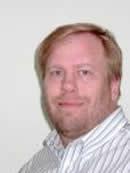 Staff System Engineer @ VMware
Mark Johnson is a Staff System Engineer at VMware where he focuses on helping people learn more about SpringSource technologies and they can aid enterprise applications.
Mark has worked on a wide range of technology during his career. Most recently he has focused on Groovy, Grails, and Scala as technologies which enable high quality applications quickly.
Mark is active in the software community as the President of the New England Java Users Group (NEJUG) and a regular presenter to user groups and various conferenes. When not working, Mark can be found riding his mountain bike on local trails and playing with his family
Paul King
 co-author of "Groovy in Action"
Paul King leads ASERT, an organization based in Brisbane, Australia which provides software development, training and mentoring services to customers wanting to embrace new technologies, harness best practices and innovate. He has been contributing to open source projects for nearly 20 years and is an active committer on numerous projects including Groovy. Paul speaks at international conferences, publishes in software magazines and journals, and is a co-author of Manning's best-seller: Groovy in Action.
Dave Klein
 Author of 'Grails: A Quick-Start Guide'
Dave is a consultant helping organizations of all sizes to develop applications more quickly (and have more fun doing it) with Grails. Dave has been involved in enterprise software development for the past 15 years. He has worked as a developer, architect, project manager, mentor and trainer. Dave has presented at user groups and national conferences. He is also the founder of the Capital Java User Group in Madison, Wisconsin, the Gateway Groovy Users in St. Louis, MO, and the author of Grails: A Quick-Start Guide, published by the Pragmatic Programmers. . Dave's Groovy and Grails related thoughts can be found at http://dave-klein.blogspot.com
Dierk Koenig
 Lead Author of Groovy in Action
Dierk König works as a fellow for Canoo Engineering AG, Basel, Switzerland.
He is a committer to many open-source projects including Groovy, Grails, and GPars, and a manager of the open-source Canoo WebTest project. He is lead author of the "Groovy in Action" book, which is amoung the publisher's best-selling titles of the decade.
Kenneth Kousen
 Author of "Making Java Groovy"
Ken Kousen is the President of Kousen IT, Inc., through which he does technical training, mentoring, and consulting in all areas of Java and XML. He is the author of the O'Reilly screencast "Up and Running Groovy", and the upcoming Manning book about Java/Groovy integration, entitled "Making Java Groovy".
He has been a tech reviewer for several books on software development. Over the past decade he's taught thousands of developers in business and industry. He is also an adjunct professor at the Rensselaer Polytechnic Institute site in Hartford, CT. His academic background includes two BS degrees from M.I.T., an MS and a Ph.D. from Princeton, and an MS in Computer Science from R.P.I.
Guillaume LaForge
 Head of Groovy Development for SpringSource
As Head of Groovy Development for SpringSource, Guillaume Laforge is the official Groovy Project Manager, and the spec lead of JSR-241, the Java Specification Request that standardizes the Groovy dynamic language. He is also a frequent conference speaker presenting Groovy and Grails at JavaOne, SpringOne, QCon, the Sun TechDays, and JavaPolis. Guillaume also co-authored Groovy in Action along with Dierk König. Before founding G2One, which was acquired by SpringSource in late 2008, and taking the role of VP Technology, Guillaume worked for OCTO Technology, a consultancy focusing on architecture and agile methodologies. While at OCTO, Guillaume developed new offerings around Groovy and Grails for its customers.
Peter Ledbrook
 Grails Advocate at SpringSource
A long-time Grails user, Peter is currently a committer to the project and officially Grails Advocate at SpringSource, a division of VMware. He is also co-author of Grails in Action with Glen Smith.
Matthew McCullough
 Open Source Architect, Ambient Ideas
Matthew McCullough is an energetic 15 year veteran of enterprise software development, open source education, and co-founder of Ambient Ideas, LLC, a Denver consultancy. Matthew currently is a trainer for GitHub.com, author of the Git Master Class series for O'Reilly, speaker at over 30 national and international conferences, author of three of the top 10 DZone RefCards, and President of the Denver Open Source Users Group. His current topics of research center around project automation: build tools (Maven, Leiningen, Gradle), distributed version control (Git), Continuous Integration (Hudson) and Quality Metrics (Sonar). Matthew resides in Denver, Colorado with his beautiful wife and two young daughters, who are active in nearly every outdoor activity Colorado has to offer.
Peter Niederwieser
 Creator of the Spock Framework
Peter Niederwieser is a computer language enthusiast from Linz, Austria. Having used Java since 1997, Peter nowadays prefers to work with more flexible languages - in particular Groovy, Scala, and Clojure. Peter is the creator of
In his day job, Peter is a Principal Software Engineer at
Graeme Rocher
 Head of Grails Development for SpringSource
As Head of Grails Development for SpringSource, Graeme Rocher is the project lead and co-founder of the Grails web application framework. He's a member of the JSR-241 Expert Group which standardizes the Groovy language. Graeme authored the Definitive Guide to Grails for Apress and is a frequent speaker at JavaOne, JavaPolis, NoFluffJustStuff, JAOO, the Sun TechDays and more. Graeme joined SpringSource in late 2008 upon the acquisition of G2One Inc. Before founding G2One, Graeme was the CTO of SkillsMatter, a skills transfer company specializing in open source technology and agile software development, where Graeme was in charge of the company's courseware development strategy and general technical direction.
Jim Shingler
 Lead Technical Architect for Big Lots
Jim is the Lead Technical Architect for Big Lots (a nationwide retailer base in Columbus, Ohio), an international speaker, an open source evangelist, coauthor of "Beginning Groovy and Grails" (2008 Apress), coauthor of "Griffon In Action" (2011 Manning). The focus of his career has been using cutting-edge technology to develop IT solutions for the retail, insurance, financial services, and manufacturing industries. He has 14 years of large-scale Java experience and significant experience in distributed and relational technologies.
Glen Smith
 Creator of Groovyblogs.org site
Glen is an Enterprise Java consultant who spends most of his days writing frameworks and highly available middle tier components for the Australian government, while also running a small recrutiment company, so if you're looking for work in Australia...
Glen has been developing in Grails since 0.1 and launched his first public Grails site (an SMS gateway) on 0.2. He blogs frequently on Groovy and Grails related matters, releases tons of sample source and is the face behind the groovyblogs.org site and the Gravl blog engine.
Venkat Subramaniam
 Founder of Agile Developer, Inc.
Dr. Venkat Subramaniam, founder of Agile Developer, Inc., has trained and mentored thousands of software developers in the US, Canada, Europe, and Asia. Venkat helps his clients effectively apply and succeed with agile practices on their software projects, and speaks frequently at international conferences and user groups. Venkat is also an adjunct faculty and teaches CS courses remotely at the University of Houston. He is author of ".NET Gotchas," coauthor of 2007 Jolt Productivity Award winning "Practices of an Agile Developer," author of "Programming Groovy: Dynamic Productivity for the Java Developer" and "Programming Scala: Tackle Multi-Core Complexity on the Java Virtual Machine" (Pragmatic Bookshelf).
James Williams
 Co-creator of Griffon and Author of Learning HTML5 Game Programming
James Williams is a Senior Software Engineer for Taulia based in Silicon Valley and a frequent conference speaker. He is a co-creator of the Griffon project, a rich desktop framework for Java applications. He and his team WalkIN, created a product on a coach bus while riding to SXSW, and were crowned winners of StartupBus 2011. He is the author of the upcoming book "Learning HTML5 Game Programming..." for Addison-Wesley. He blogs at http://jameswilliams.be/blog and tweets as @ecspike.
- NFJS SITES:
- No Fluff Just Stuff
- Uber Conf
- NFJS One
- SpringOne 2GX
- Rich Web Experience
- Project Automation Experience
- SPRINGSOURCE SITES:
- Springsource.com
- Springsource.org
© 2011 No Fluff, Just Stuff TM and SpringSource, a division of VMware. All rights reserved. Java is a registered trademark of Oracle.