SpringOne 2GX 2011
Chicago, October 25-28, 2011

For Members

 Magnificent Mile Marriott
Downtown Chicago
540 North Michigan Ave.
Chicago, Illinois 60611
1 (800) 228-9290
[ Map it ]
Jim Shingler
Lead Technical Architect for Big Lots


Jim is the Lead Technical Architect for Big Lots (a nationwide retailer base in Columbus, Ohio), an international speaker, an open source evangelist, coauthor of "Beginning Groovy and Grails" (2008 Apress), coauthor of "Griffon In Action" (2011 Manning). The focus of his career has been using cutting-edge technology to develop IT solutions for the retail, insurance, financial services, and manufacturing industries. He has 14 years of large-scale Java experience and significant experience in distributed and relational technologies.
Presentations
Using Grails on a publicly facing Fortune 500 website
By now most everyone in web development has heard of Grails and the productivity gains though its use. But is it ready for a public facing Fortune 500 company website?
In this session we will explore the decision to use Grails, the approach and processes, and the results. We will discuss a variety of topics including:
- The deployment architecture
- Performance
- Caching and Load Balancing
- Statics
- Tools: TC Server, Insight, Hyperic, STS
- JVM settings
Content Mgmt with a Custom Grails CMS
You are creating a website and the business wants to change the content on regular basis. What are your options and why a custom CMS solution might be a good answer.
In this session we will look at the problem space requirements: Managing Content, Content Promotion, SEO, and others. We will look at some of the options and why a custom CMS might be the best option. Finally, we will explore how to approach creating a custom CMS solution.
Books
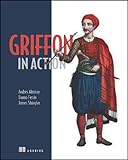
by Andres Almiray, Danno Ferrin, and James Shingler
 List Price:
 $44.99
Price: $24.54
You Save: $20.45 (45%)
-
Griffon, an agile framework based on the Groovy language, makes user interface development dramatically faster and easier. In many respects, Griffon is for desktop development what Grails is for web development.
Griffon in Action is a comprehensive tutorial written for Java developers who want a more productive approach to UI development. In this book, readers will immediately dive into Griffon. After a Griffon orientation and a quick Groovy tutorial, they'll start building examples that explore Griffon's high productivity approach to Swing development. The book covers declarative view development, like the one provided by JavaFX Script, as well as the structure, architecture and life cycle of Java application development.
List Price: $44.99
Price: $24.54
You Save: $20.45 (45%)
Price: $24.54
You Save: $20.45 (45%)
-
Griffon, an agile framework based on the Groovy language, makes user interface development dramatically faster and easier. In many respects, Griffon is for desktop development what Grails is for web development.
Griffon in Action is a comprehensive tutorial written for Java developers who want a more productive approach to UI development. In this book, readers will immediately dive into Griffon. After a Griffon orientation and a quick Groovy tutorial, they'll start building examples that explore Griffon's high productivity approach to Swing development. The book covers declarative view development, like the one provided by JavaFX Script, as well as the structure, architecture and life cycle of Java application development.
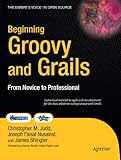
by Christopher M. Judd, Joseph Faisal Nusairat, and James Shingler
 List Price:
 $42.99
Price: $28.51
You Save: $14.48 (34%)
-
The Rails web framework has taken the software industry by storm, offering legions of web developers the ability to create web sites faster and more efficiently than ever before. But taking advantage of Rails means learning an entirely new paradigm, in addition to the language Rails is built upon: Ruby. Accordingly, other developer communities have implemented their own versions of Rails, but built using their preferred language. For millions of Java developers, this native framework is Grails, and the Java-centric scripting language its built upon: Groovy.
Beginning Groovy and Grails introduces Java developers to this popular framework and scripting language by guiding readers through the creation of a series of real-world projects. Each project introduces a new facet of Grails and Groovy, and affords readers the ability to download and experiment with the code. Authored by industry veterans Christopher Judd, Joseph Faisal Nusairat, and Jim Shingler, readers are treated not only to profound knowledge of the topic, but also to considerable insight shared as a result of the authors’ combined decades of Java experience.
See the following resources for more information on Grails and Groovy:
Grails project website: http://grails.codehaus.org/
Groovy project web site: http://groovy.codehaus.org/
List Price: $42.99
Price: $28.51
You Save: $14.48 (34%)
Price: $28.51
You Save: $14.48 (34%)
-
The Rails web framework has taken the software industry by storm, offering legions of web developers the ability to create web sites faster and more efficiently than ever before. But taking advantage of Rails means learning an entirely new paradigm, in addition to the language Rails is built upon: Ruby. Accordingly, other developer communities have implemented their own versions of Rails, but built using their preferred language. For millions of Java developers, this native framework is Grails, and the Java-centric scripting language its built upon: Groovy.
Beginning Groovy and Grails introduces Java developers to this popular framework and scripting language by guiding readers through the creation of a series of real-world projects. Each project introduces a new facet of Grails and Groovy, and affords readers the ability to download and experiment with the code. Authored by industry veterans Christopher Judd, Joseph Faisal Nusairat, and Jim Shingler, readers are treated not only to profound knowledge of the topic, but also to considerable insight shared as a result of the authors’ combined decades of Java experience.
See the following resources for more information on Grails and Groovy:
Grails project website: http://grails.codehaus.org/
Groovy project web site: http://groovy.codehaus.org/
- NFJS SITES:
- No Fluff Just Stuff
- Uber Conf
- NFJS One
- SpringOne 2GX
- Rich Web Experience
- Project Automation Experience
- SPRINGSOURCE SITES:
- Springsource.com
- Springsource.org
© 2011 No Fluff, Just Stuff TM and SpringSource, a division of VMware. All rights reserved. Java is a registered trademark of Oracle.